Hummer Jeep Driving Sim
Popular Games
Last Played
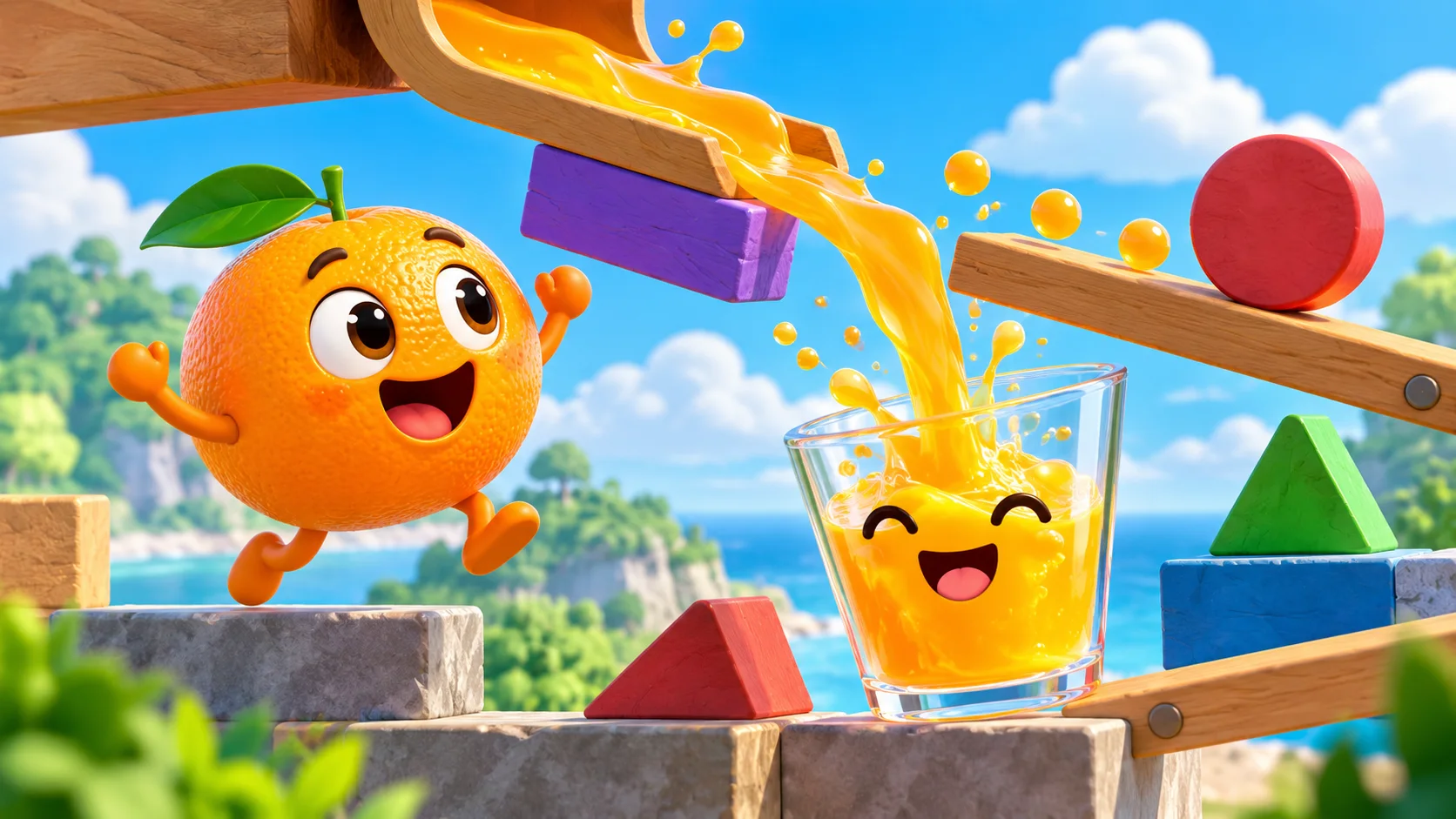
Happy Orange Glass is a drawing puzzle built around one clear task: create a line that guides juice into a glass. The supplied description confirms obstacles, physics-based movement, and a need for planning and logic. That compact premise makes the route visible before it exists; the player studies the scene, draws a possible solution, and then watches how the liquid responds.
Before a line is drawn, the gap between the juice and the glass contains several possible routes. Obstacles remove some of those possibilities, while gravity and contact can change others. The useful first step is to compare the starting point, the rim of the glass, and every object between them.
A direct line is not automatically a successful one. Its angle and position need to work with the movement shown by the game. The source does not describe a drawing limit, star system, or number of attempts, so those details should be learned from the current interface.
Each mark expresses an expectation about what the juice will do. Once the simulation begins, the result provides feedback: the route may guide the liquid correctly, redirect it too early, or leave a gap. That observation can inform the next attempt without requiring an invented universal solution.
Clean visual separation helps. The drawn line, obstacles, liquid, and glass each need a recognizable role. A bright and simple composition can make the relationship easier to inspect, but the supplier does not confirm a particular palette or animation style beyond the general game presentation.
Open Happy Orange Glass to inspect the current puzzle and drawing controls. The Puzzle Games category provides more logic-based choices on the site. Use the live screen to confirm how a line begins, ends, and interacts with the scene.
A practical attempt follows a short sequence: identify the source, locate the glass, note every obstacle, draw one deliberate route, then watch the result from start to finish. Changing one important section at a time makes the feedback easier to understand than replacing the entire idea immediately.
The glass supplies a stable destination while the path can change. Its opening needs to remain visible so the player can judge where the liquid must arrive. The source confirms the goal but does not state a required fill amount or scoring threshold, making the active level the final authority.
Happy Orange Glass turns a simple drawing action into a small experiment. Planning creates a hypothesis, physics tests it, and the result reveals whether the line worked. The appeal comes from this readable cycle rather than from unsupported claims about rewards, level counts, or special tools.
Each attempt also makes the relationship between shape, space, and motion easier to compare.