Hummer Jeep Driving Sim
Popular Games
Last Played
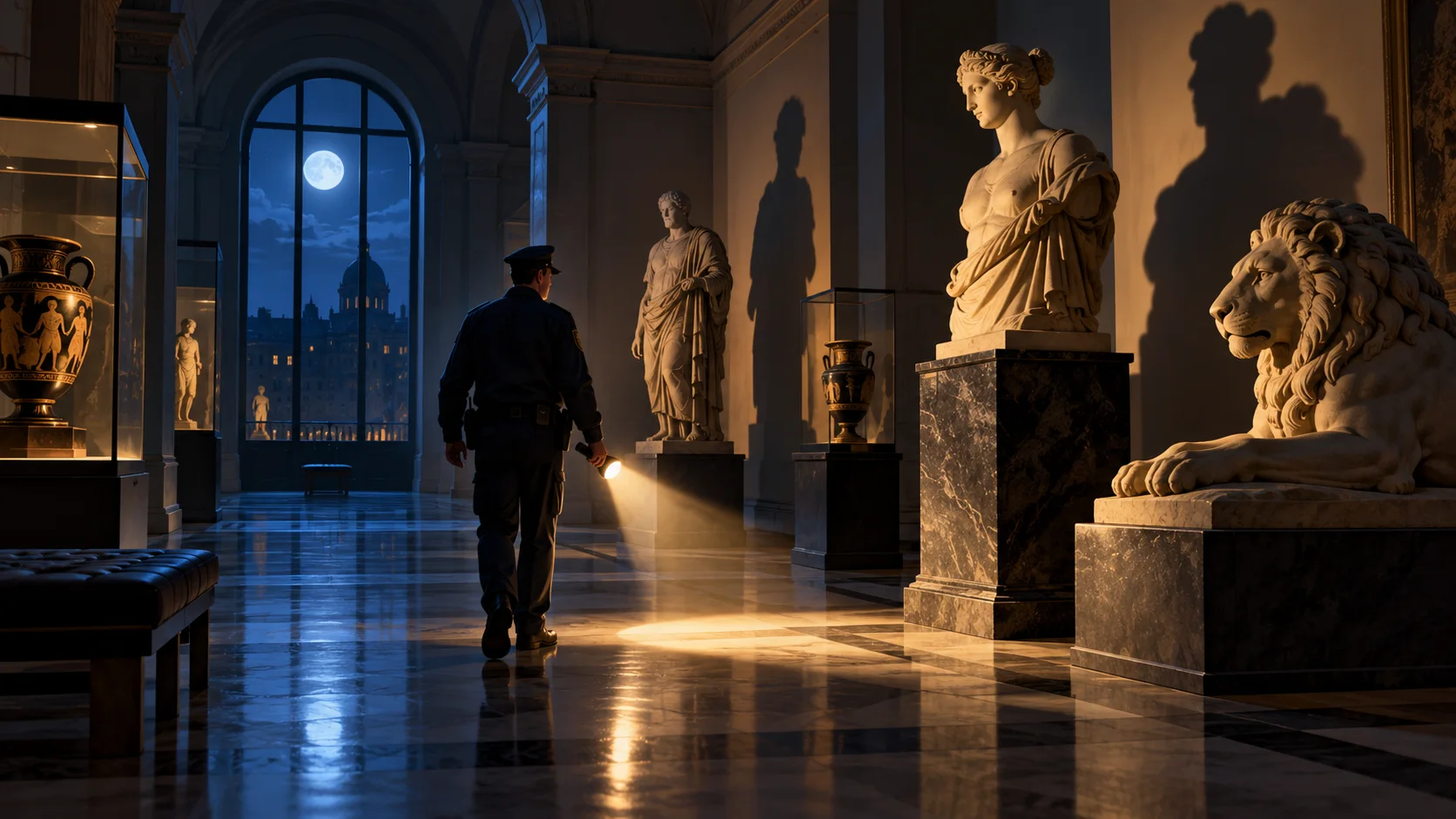
Museum Night Shift turns a dim exhibition environment into a discovery scene. Display areas, corridors, objects, and visual clues share a subdued frame, encouraging the eye to move slowly rather than chase constant motion. The public presentation establishes atmosphere and observation without confirming specific missions, characters, rewards, or progression.
In a night setting, brightness carries more responsibility than decoration alone. A lit object can become the focal point, while a darker corridor preserves uncertainty around the edge of the scene. Useful contrast reveals shape without erasing surrounding context.
Reflections and small highlights may connect separate surfaces. When restrained, they help define glass, polished floors, or display cases. When too strong, they can compete with the clue or object being inspected.
A museum feels coherent when frames, pedestals, cases, and architectural edges return from one area to another. These repeated forms act as landmarks. A distinctive object or doorway can then mark a local change without making the interior feel unrelated to the rest of the building.
Corridors provide visual transitions. Their lines lead the eye from the current room toward a partially visible space, creating anticipation through composition rather than unsupported story claims.
A puzzle-themed page invites conclusions, but the reliable method is to record what the public view actually shows. Compare positions, colors, silhouettes, and highlighted regions. A changed detail may deserve attention; its precise meaning should come from the live prompts rather than an invented explanation.
Visit Museum Night Shift to inspect the current exhibition setting. Browse Puzzle Games when you want to discover other browser titles organized around observation and visual comparison.
The strongest quality of Museum Night Shift is its controlled pace. Stable architecture gives orientation, selected lights create focus, and darker areas retain atmosphere. Each clue can remain part of the room instead of appearing as an unrelated overlay.
A practical viewing loop moves from the widest room shape to the brightest local detail, then back toward the corridor or boundary. That repeated scan turns the museum into a connected visual environment. It preserves mystery while keeping the published scene understandable, accessible, and grounded in confirmed material.
Display spacing contributes to that calm rhythm. A single object surrounded by open wall or floor space gains importance without animation. A denser group invites comparison among several silhouettes, while repeated cases and frames preserve identity.
Color temperature can also divide the interior. A warmer pool of light distinguishes one display from a cooler corridor without adding a visible barrier. These atmospheric zones support observation and allow the museum to feel layered while remaining easy to read. Partial doorways and cropped cases suggest continuation without claiming undocumented rooms or story events. Quiet floor and ceiling lines keep those glimpses attached to the current exhibition space and its measured nighttime atmosphere.