Hummer Jeep Driving Sim
Popular Games
Last Played
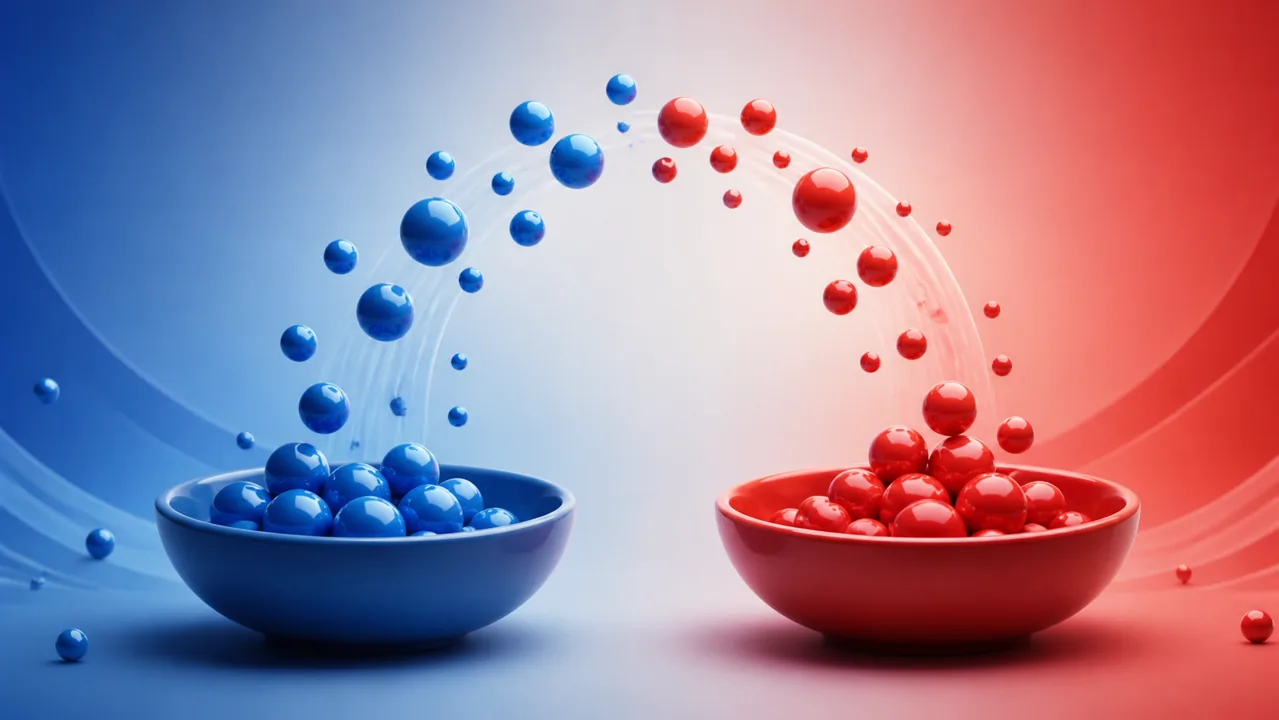
Primes uses blue and red balls, two bowls, and a hold-and-release mouse gesture to create an abstract sorting interaction. The published instruction states that releasing swaps bowls between the colored balls. This article examines visual balance and color separation without assigning mathematical rules that are not explicitly confirmed.
Blue and red are easily distinguished when saturation, lighting, and background contrast remain consistent. Two bowls provide clear destinations, while the space between them shows movement. That arrangement can communicate state changes without a dense interface.
The image above is original editorial artwork made for this article. It is an abstract interpretation, not a game screenshot.
A hold gesture creates a temporary state before the release triggers a visible change. Clear feedback during both stages is important: the selected state should be recognizable, and the bowl swap should be easy to follow. Slow initial inputs help establish the relationship.
Even without assuming a specific objective, symmetry and alternation can create rhythm. A balanced layout makes differences more noticeable, while each transfer temporarily changes the distribution of color and weight across the screen.
Primes is available on PokiGames. It appears in the Hypercasual Games category, where concise inputs meet many different themes. Recent additions are available from the PokiGames homepage.
Primes demonstrates how limited colors and a staged mouse gesture can form a clear digital composition. Its readability depends on immediate state feedback, consistent color identity, and visible movement between the two sides.